05 / Design thinking · Food packaging
CrumbLiner
What if the wrapper were part of the meal?
01 / THE QUESTION
The problem
A wrapper does a short job: it keeps food together until someone eats it. The team asked what would happen if the liner could be eaten too.
Who it is for
We considered diners and the people serving them, from college canteens and bakeries to busy takeaway counters.
The approach
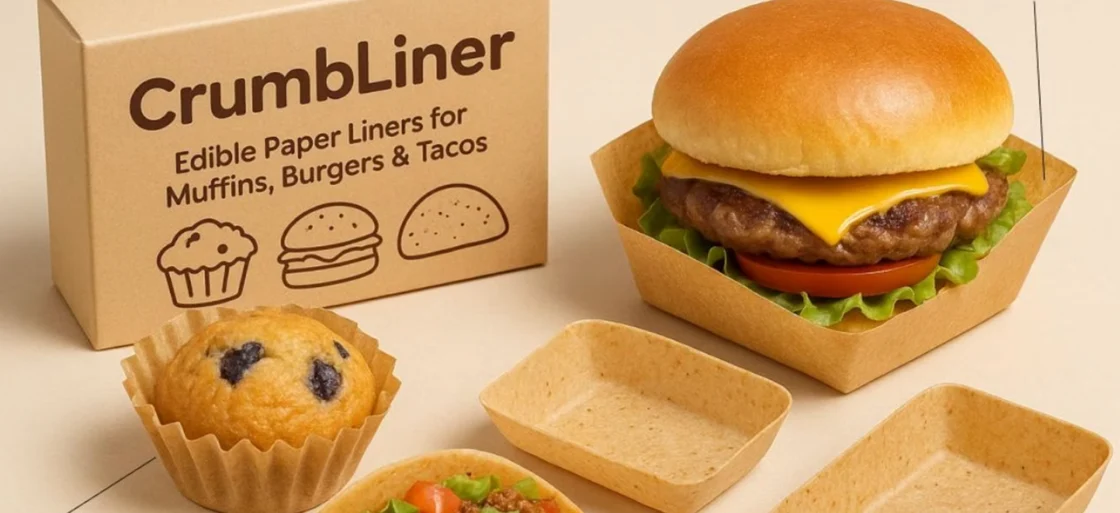
We proposed shaping a millet-and-rice-starch liner around foods such as burgers and muffins. The illustration explores how different serving shapes might work.
02 / TEAM APPROACH
Team approach
Our team used empathy mapping, a pain-to-gain exercise and concept visualisation to connect a diner’s experience with an outlet’s packaging decisions.
Technology & methods
- Empathy mapping
- Concept visualisation
- Business modelling
03 / DESIGNING THE WORK
Key decisions
Start with the moment of use
The empathy map followed a diner handling greasy food and discarding its wrapper. It surfaced questions about mess and convenience; it was a design exercise, not measured customer feedback.
Consider the outlet as well as the diner
Canteens, bakeries and takeaway counters handle different foods. A muffin liner and a burger tray illustrate why a single shape would not suit every serving.
Identify what would change the decision
Would outlets accept the unit cost? How long could liners be stored, and how would staff handle them hygienically? These are questions to test before proposing a pilot.
04 / WHERE IT STANDS
Results & limitations
The result was a set of packaging concepts and potential use settings. We learned to separate the appeal of an edible liner from the practical evidence a food outlet would need to use it.
What this does—and does not—establish
The concept illustration is not test evidence. Food safety, shelf life, heat resistance and environmental impact have not been established here.
Current status
Team concept presentation; no commercial product or validated performance is claimed.