Problem and motivation
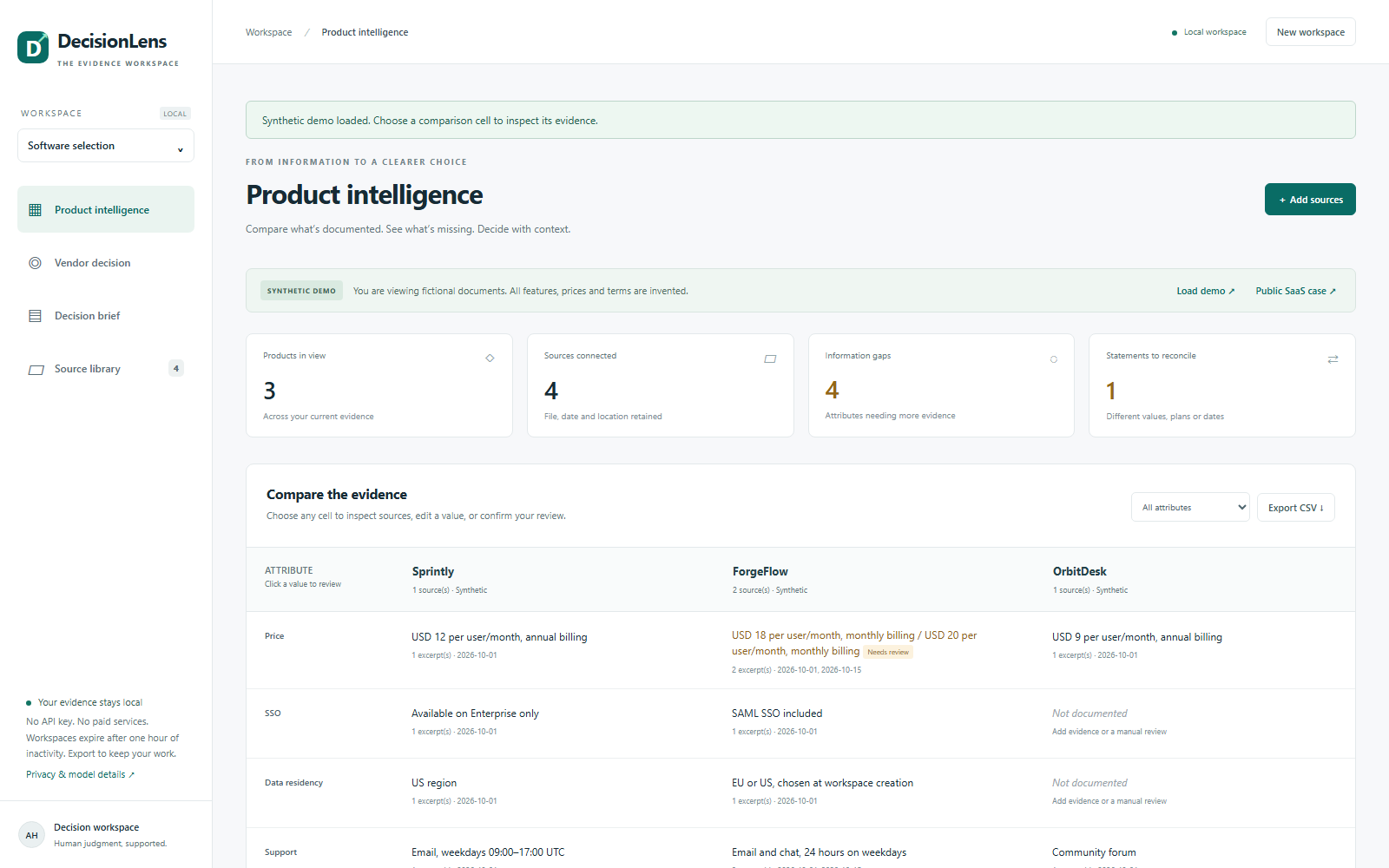
Product information is spread across documents with gaps, different dates and plan-specific claims. A decision needs inspectable evidence and explicit priorities.
Engineering teams and decision-makers comparing product documentation or vendor proposals.
 View full image ↗
Technical approach
A local Python dashboard combines MiniLM semantic retrieval and BM25 keyword search. Labelled facts retain excerpts and page/section information; users review missing or differing values, set priorities and export a decision brief.
My contribution
Extended my original PDF RAG chatbot into DecisionLens with AI-assisted development: document processing, evidence review, product comparison, user-defined priorities and decision-brief exports.
Keep evidence inspectable
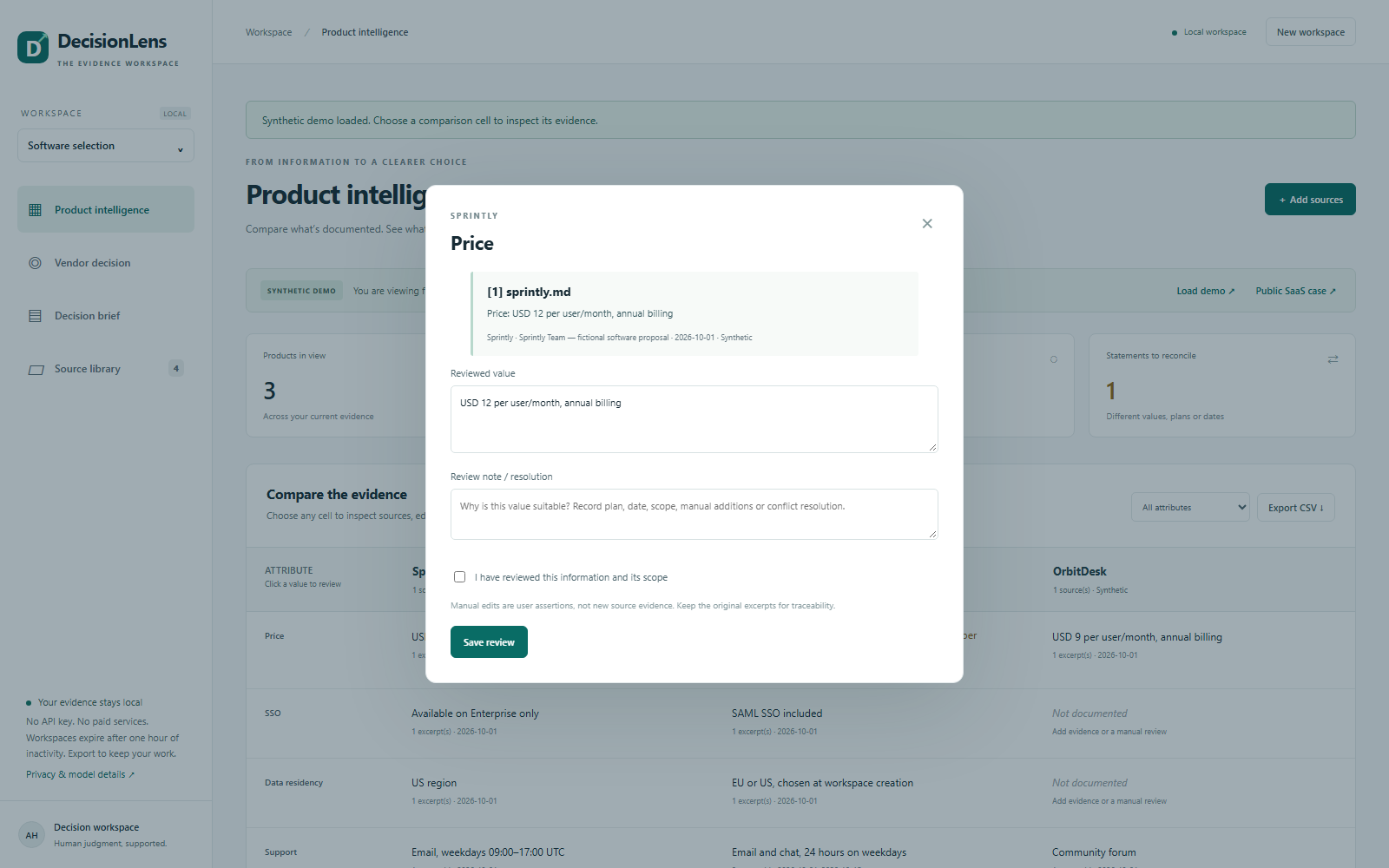
Retain excerpts, document names, page/section locations, supplied dates and source links alongside candidate facts.
Make uncertainty visible
Leave missing information unknown, flag differing values and require user review rather than inventing a complete comparison.
Keep the final decision human
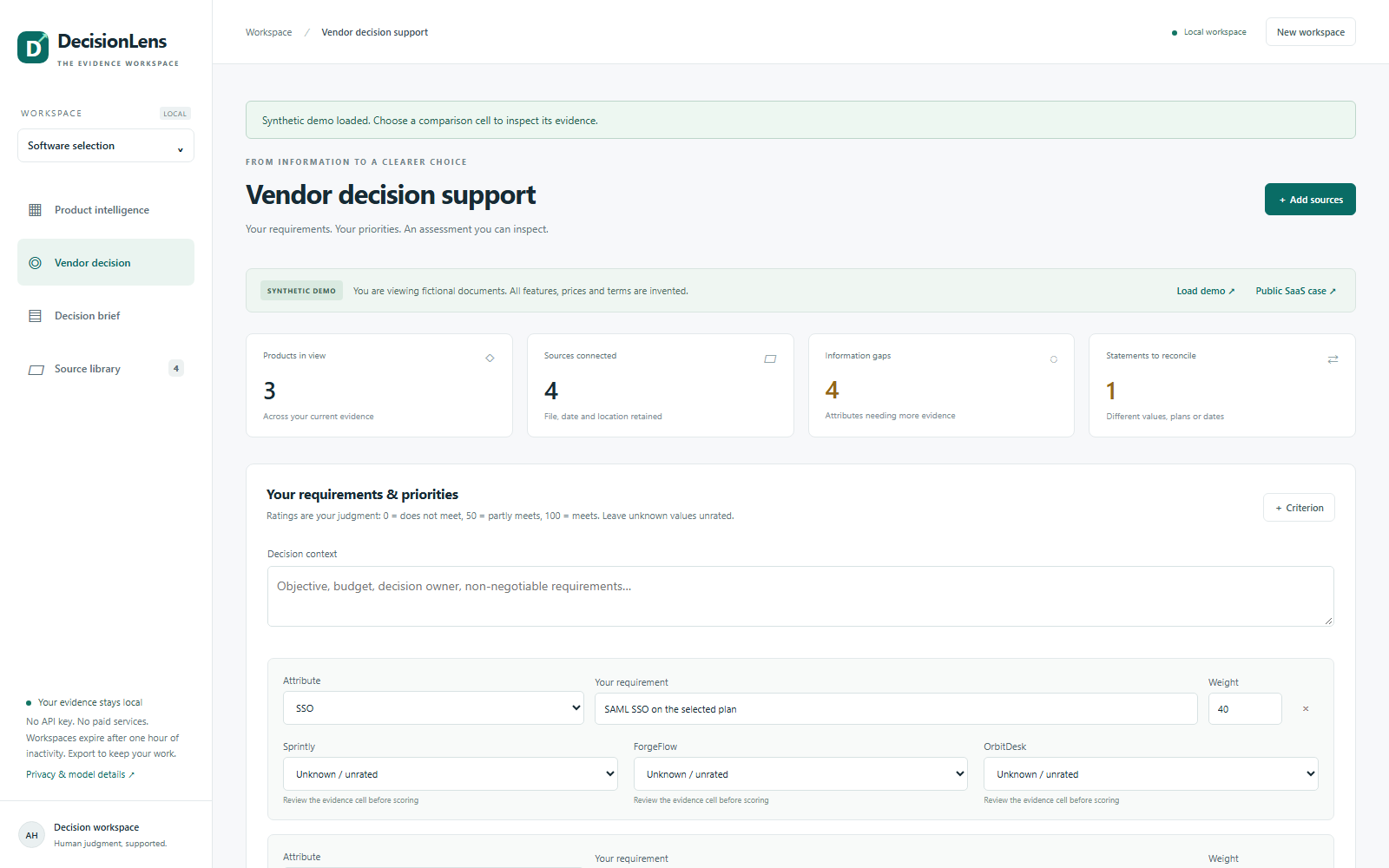
Use explicit user ratings and weighted coverage. Scores exclude unknown values and do not declare an automatic winner.
Inspecting the evidence behind a comparison
 View full image ↗
Vendor decision support with adjustable priorities
 View full image ↗
Results and limitations
Delivered a local document-to-decision workflow: upload multiple sources, compare documented attributes, inspect page/section evidence, edit and confirm information, set weighted priorities and export a decision brief. All 19 application tests passed; the browser walkthrough covered PDF upload, page-level evidence, review, scoring and downloaded exports.
Text-based documents are supported; scanned PDFs need external OCR. Automatic extraction works best with labelled attributes and may miss prose. Generated drafts require verification against the original evidence. Users make the final decision.
Current status
Completed local application with Windows setup instructions. Runs without an API key or paid service and supports document uploads, evidence-backed comparisons, editable reviews, transparent scoring and CSV, JSON and Markdown exports. Source code is available on GitHub.
Technologies and source
- Python
- FastAPI
- MiniLM
- BM25
- Streamlit